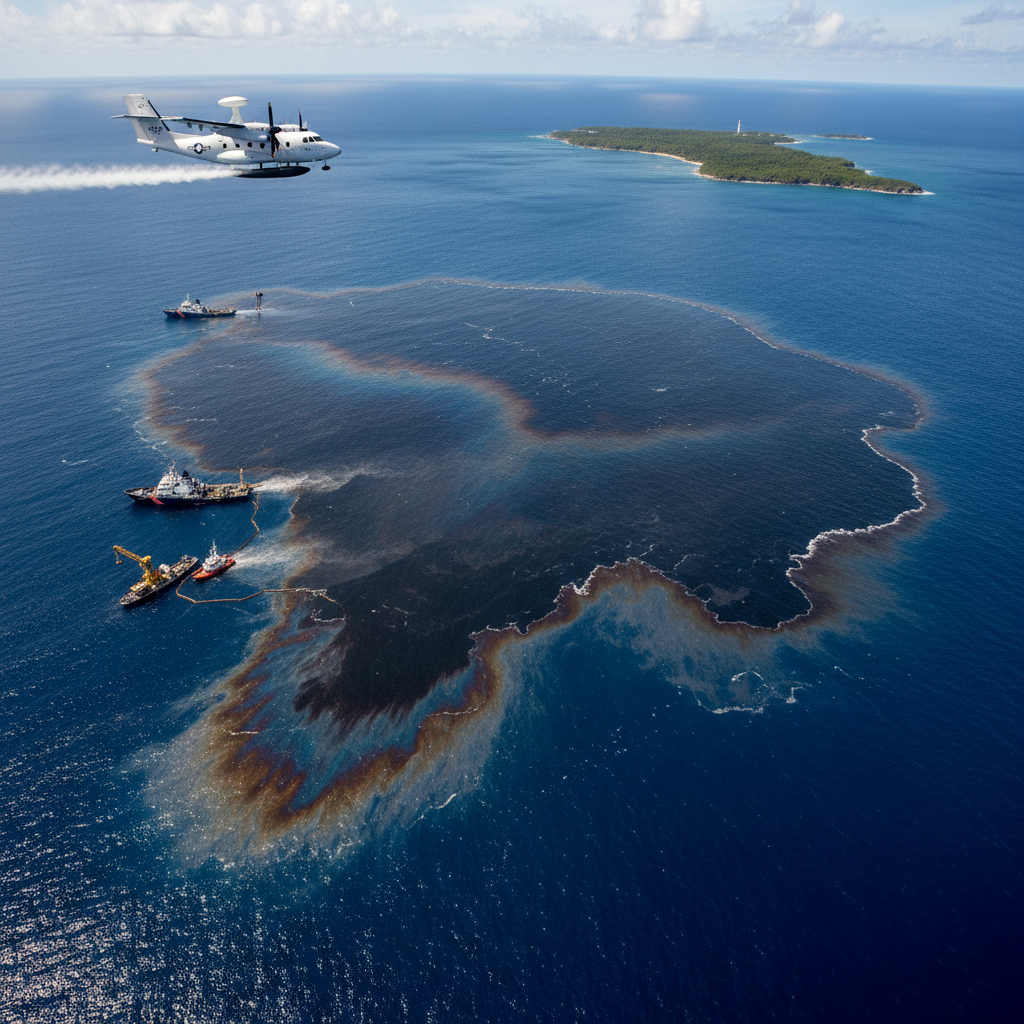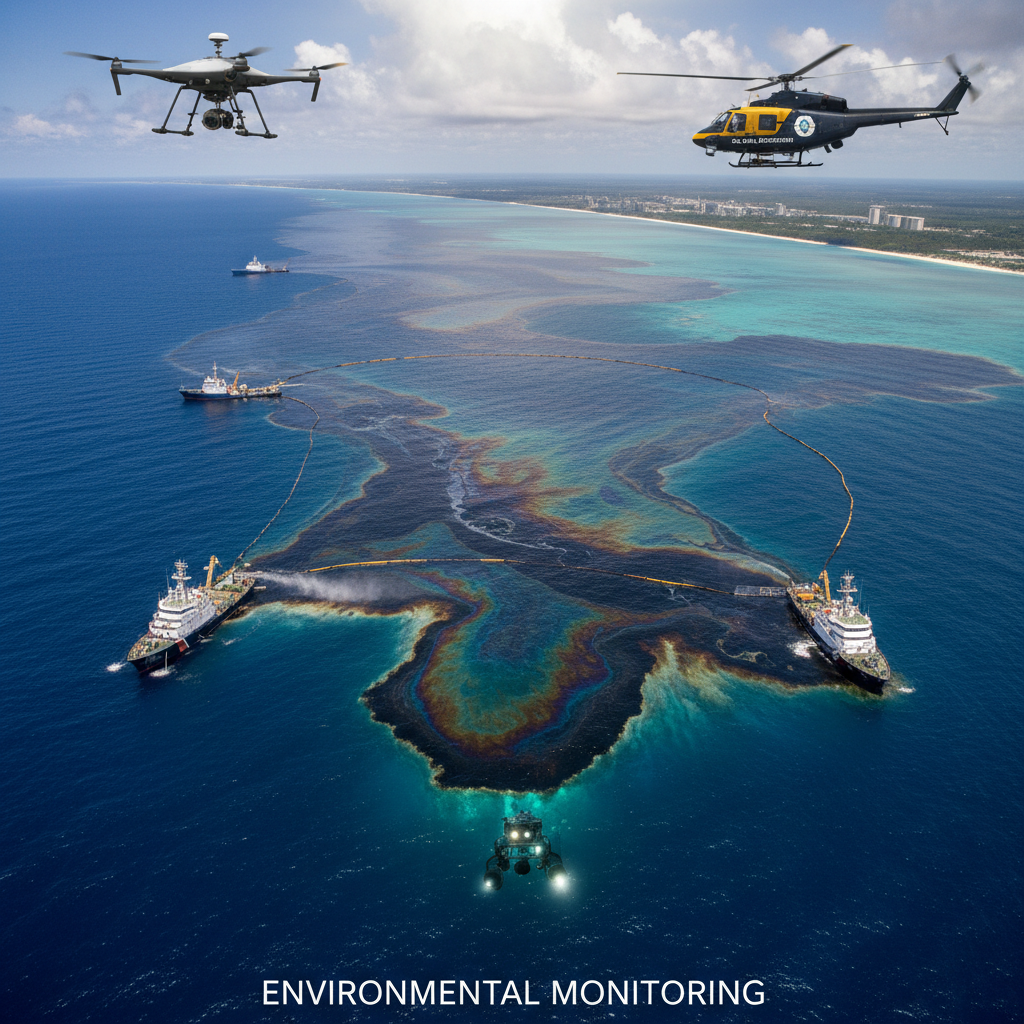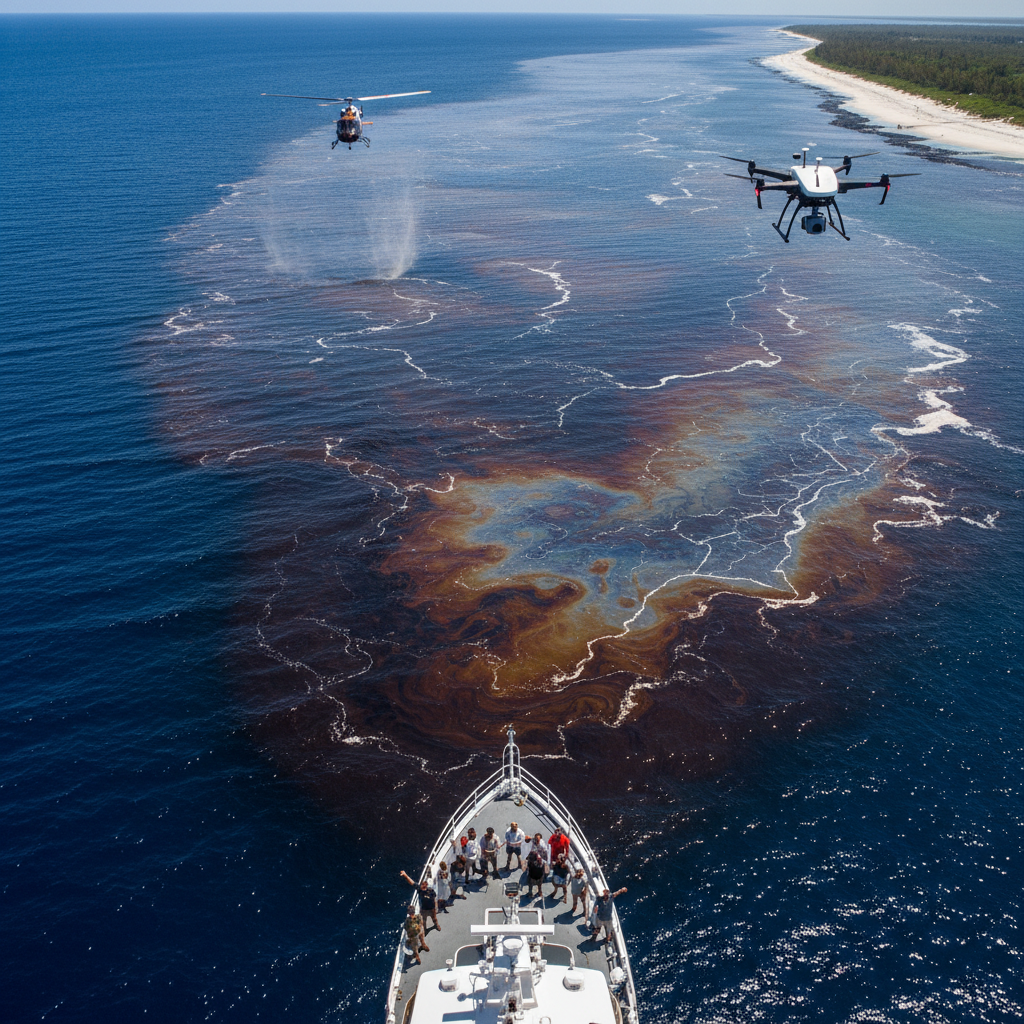
Industrial sites need a dependable process for recognizing potential contamination and deciding what to do next. A spill can arise during a transfer operation, equipment servicing, or routine use of oil-containing machinery. At Leakwise, we approach Oil spill detection as a combination of suitable technology, considered placement, and clear operational procedures. The quality of the overall arrangement depends on how well these elements match the facility’s layout and everyday activities.
Beginning with the spill scenario
Before selecting a detection location, teams should describe the event they want to identify. The likely source, possible release route, collection area, and available response time all help define the objective.
A spill near a loading area may require a different monitoring arrangement from one within an equipment containment. Personnel should understand how the material would reach the monitored point and which barriers or drainage features could affect that movement.
We recommend checking these assumptions with operations and maintenance teams. Their knowledge of actual site practices can reveal conditions that are missing from drawings or initial project descriptions.
Establishing meaningful oil spill detection coverage
Oil spill detection should be planned around identifiable locations and clearly stated coverage. A sensor indication provides information about the monitored point; it should not be interpreted as direct observation of every possible release elsewhere on the site.
Coverage planning therefore requires attention to separate drainage routes, isolated containments, and areas where liquid may collect without reaching the proposed sensor.
Our company develops sensors intended to provide real-time indications of oil leaks, spills, and contamination. The intended application should guide the selection and arrangement of that equipment.
Integrating on-line oil spill detection into site procedures
On-line oil spill detection should fit the way personnel supervise the facility. Teams should decide how an indication will reach the responsible operator and what information accompanies it.
Clear location names are useful. A notification that identifies a particular basin or equipment area helps personnel begin their investigation more effectively than an ambiguous site-wide message.
We also recommend reviewing arrangements for nights, weekends, and shift handovers.
Defining actions before an incident
Oil spill detection can support a prompt response when the required actions have already been considered. Personnel should know how to inspect the location safely, whom to notify, and which operational decisions require approval.
A response plan should distinguish between the detection event, the investigation, and the assessment of its consequences. These stages may involve different teams and different evidence.
Learning from records and inspections
Incident records should explain more than the fact that an indication occurred. Useful details include the time, operating activity, inspection findings, suspected source, and actions taken.
We recommend reviewing repeated events to determine whether equipment, procedures, or monitoring arrangements need attention. A recurring issue may justify a maintenance investigation or a closer examination of the drainage route.
The installation should also be checked after physical changes to the site. New equipment or altered collection arrangements can change the relationship between a spill source and an existing sensor.
At Leakwise, we help customers consider detection within the wider operating environment. Contact us to discuss your industrial site and Oil spill detection requirements. We can help you review potential monitoring locations and the installation information needed to develop a solution that supports clear investigation and coordinated protective action.